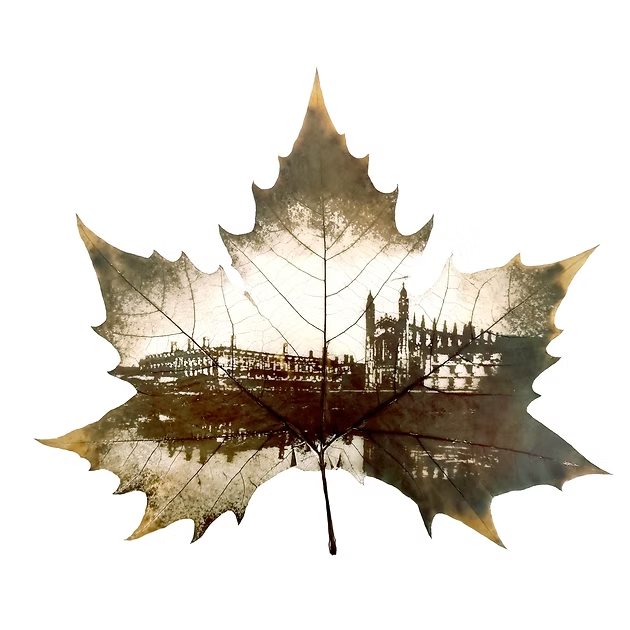
In the fast-paced daily life, we are always searching for little joys that carry a “warm touch”—maybe a cup of hot drink from a street café, or a well-worn book on the shelf. But when I first encountered handmade leaf carvings, I realized that an ordinary fallen leaf could be endowed with vitality spanning a thousand years by craftsmen. It is not a cold industrial product, but a symbiosis of nature’s gifts and human craftsmanship, a touch of Eastern romance hidden in the delicate veins of a leaf.
When I first saw a leaf carving, I couldn’t help wondering: When did this exquisite craft first appear? Later, I learned that leaf carving (also known as “leaf cutting”) has long been a cultural symbol deeply rooted in Chinese heritage. Records of it can be traced back to the early Western Zhou Dynasty (c. 1046–771 BCE).
You may have heard the allusion “Cutting Paulownia to Enfeoff Shuyu”: King Cheng of Zhou was sitting casually with his younger brother Shuyu. He picked a paulownia leaf, cut it into the shape of a jade scepter (a symbol of authority), and smiled, “I will enfeoff you with this.” Though it started as a joke, the Duke of Zhou took it seriously, and Shuyu was eventually enfeoffed in the Jin region. This carved paulownia leaf is considered the earliest prototype of leaf carving.
By the Han Dynasty (202 BCE–220 CE), leaf carving had already entered ordinary people’s lives. A poem describes the scene: “Palace ladies of the Han Dynasty played with their children by the window, cutting paulownia leaves to adorn window screens.” This shows that leaf-cutting art had become quite popular back then, evolving from a royal anecdote into a gentle craft that decorated daily life.
Over thousands of years, leaf carving has not been lost to time; instead, it has become part of China’s intangible cultural heritage. Today, when we hold a leaf carving, the texture we feel under our fingertips is not just the veins of a leaf, but the cultural warmth passed down through millennia.
As an ordinary consumer, I once wondered: Why can no two leaf carvings be exactly the same? The answer lies in the very first step—material selection.
Leaf carving does not use just any random leaf. Craftsmen select mature fallen leaves from autumn (though innovative techniques now also use green leaves for modern designs). The top criteria are “tough texture and vibrant color”: leaves that are too brittle will break during carving, while those with messy veins cannot support delicate patterns. What’s more fascinating is that the texture, size, and vein pattern of each leaf are unique—like human fingerprints. This means that from the moment a leaf is chosen, the work is destined to be one-of-a-kind.
Selected leaves then go through multiple processes: cleaning, anti-corrosion treatment, drying, dehydration, and trimming. Skipping any step could cause the leaf to warp or mildew, ruining all subsequent carving efforts. I once talked to a craftsman, who said, “Choosing a leaf is like finding a friend; you need to understand its ‘temperament’ to shape it into what you want.” It turns out that the birth of a leaf carving begins with meeting the “right leaf.”
If material selection is the “soul” of a leaf carving, then carving is the process that breathes life into it. I once watched a craftsman carve: he held his breath, his carving knife thinner than an embroidery needle, carefully outlining and detailing on the fragile veins—even a slight mistake could shatter the entire leaf.
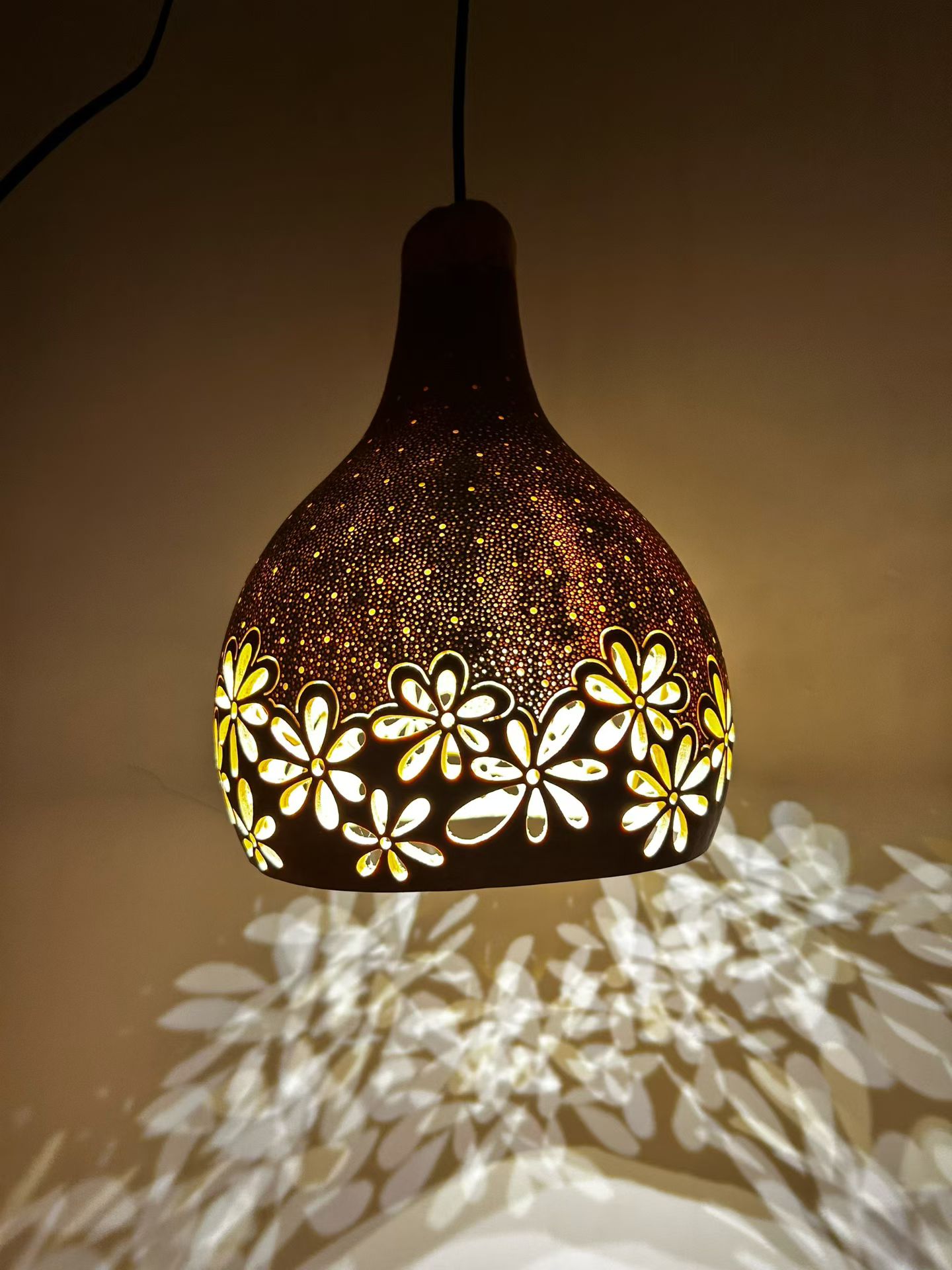
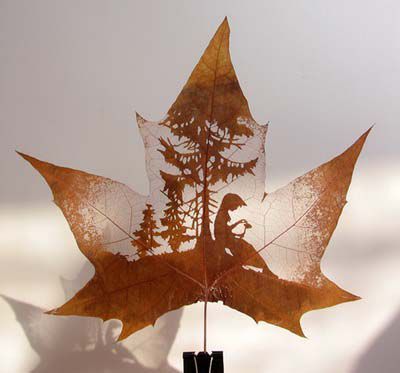
The magic of leaf carving lies in “taking advantage of nature’s inherent form.” Craftsmen do not force the leaf into an unnatural shape; instead, they design patterns based on the natural crisscross of veins, even incorporating natural imperfections. It integrates the layering of printmaking, the delicacy of micro-carving, and the agility of paper-cutting. Sometimes the design is a scene of Jiangnan’s ancient bridges and flowing water; sometimes it’s a lively bird; sometimes it’s a gentle blessing. When light filters through the carved patterns, it casts a colorful glow like stained glass. In that moment, you realize: this is not just “carving a leaf”—it’s telling a story on its veins.
The transformation from an ordinary fallen leaf to a work of art is a process filled with care and love. I once asked a craftsman, “How long does it take to carve one leaf?” He replied, “A few hours at the fastest, a few weeks at the slowest. It’s not about rushing—it’s about making the leaf and the pattern ‘fit together.'” This unhurried dedication is exactly what makes craftsmanship so precious today.
In my journey of exploring leaf carvings, I met Mutong, a young leaf carving artist. His story made me understand that “inheritance” is not about clinging to the past, but about making ancient crafts thrive in the present.
Mutong first fell in love with leaf carving because he was captivated by the exquisite details within the small space of a leaf. However, he noticed that traditional wet carving, though simple and elegant, lacked precision. Determined to improve this with knife carving, he sought guidance from Master Lü, who taught him the basic techniques and creative concepts of leaf carving, laying a solid foundation. To pursue higher artistic attainments, he formally studied under Mr. Sun Yongqing—an inheritor of the intangible cultural heritage of paper-cutting from Yangzhong, Zhenjiang, Jiangsu Province. Mutong integrated the composition, knife skills, and symbolic expression of paper-cutting into leaf carving, gradually developing his unique style.
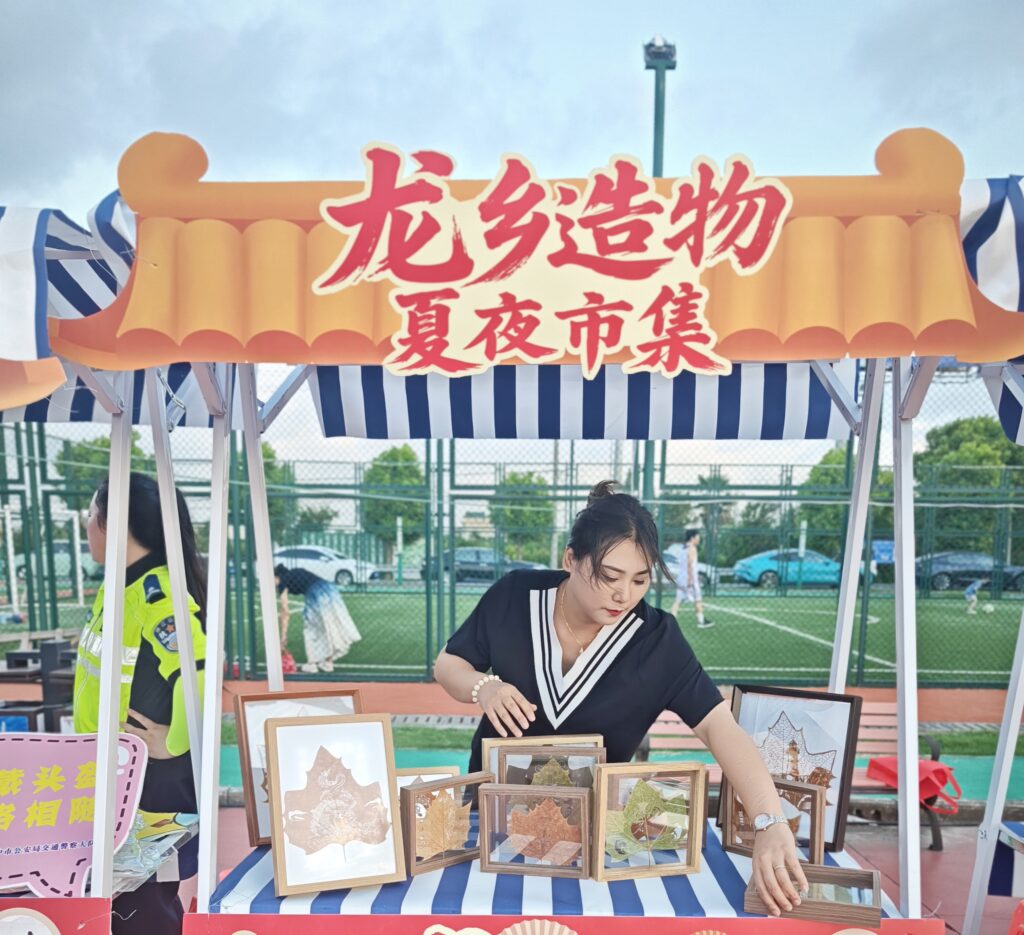
Today, his works use leaves as “paper” and knives as “brushes,” telling Chinese stories and depicting local ancient architectures on natural leaf veins to promote regional culture. Each piece combines exquisite craftsmanship with profound humanistic feelings. I once saw one of his works: a carving of Jiangnan’s bridges and flowing water, where the leaf’s veins happened to resemble the ripples of water. In that moment, I realized that craftsmen are not just carving leaves—they are preserving the beauty worth remembering.
As a consumer, one of my biggest questions was: “How can I use leaf carvings?” It turns out their forms are more versatile than I imagined, fitting different life scenarios:
Daily Items: Leaf-carved bookmarks and greeting cards. Tucked in a book or given to a friend, the affection carried by a single leaf speaks louder than a thousand words.
Home Decor: Leaf carvings paired with solid wood stands or ruyi-shaped stands (ruyi is a traditional Chinese symbol of good fortune). Placed in a study or living room, they add a touch of natural aesthetics and humanistic charm to the space.
Collection Gift Boxes: Leaf carvings packaged in solid wood boxes or high-end gift boxes with dragon patterns and auspicious cloud jacquard. They are perfect for birthdays, festivals, or personal collections, full of ritual sense.
I once gave a friend a leaf-carved bookmark engraved with plum blossoms. Later, she told me that every time she opens that book and sees the bookmark, she thinks of the afternoon we spent chatting. It turns out that the value of a leaf carving goes beyond being a “work of art”—it becomes a carrier of emotions.
Many people ask: “Is leaf carving worth collecting?” As an ordinary enthusiast, my answer is: “Yes, because of its irreplaceability.”
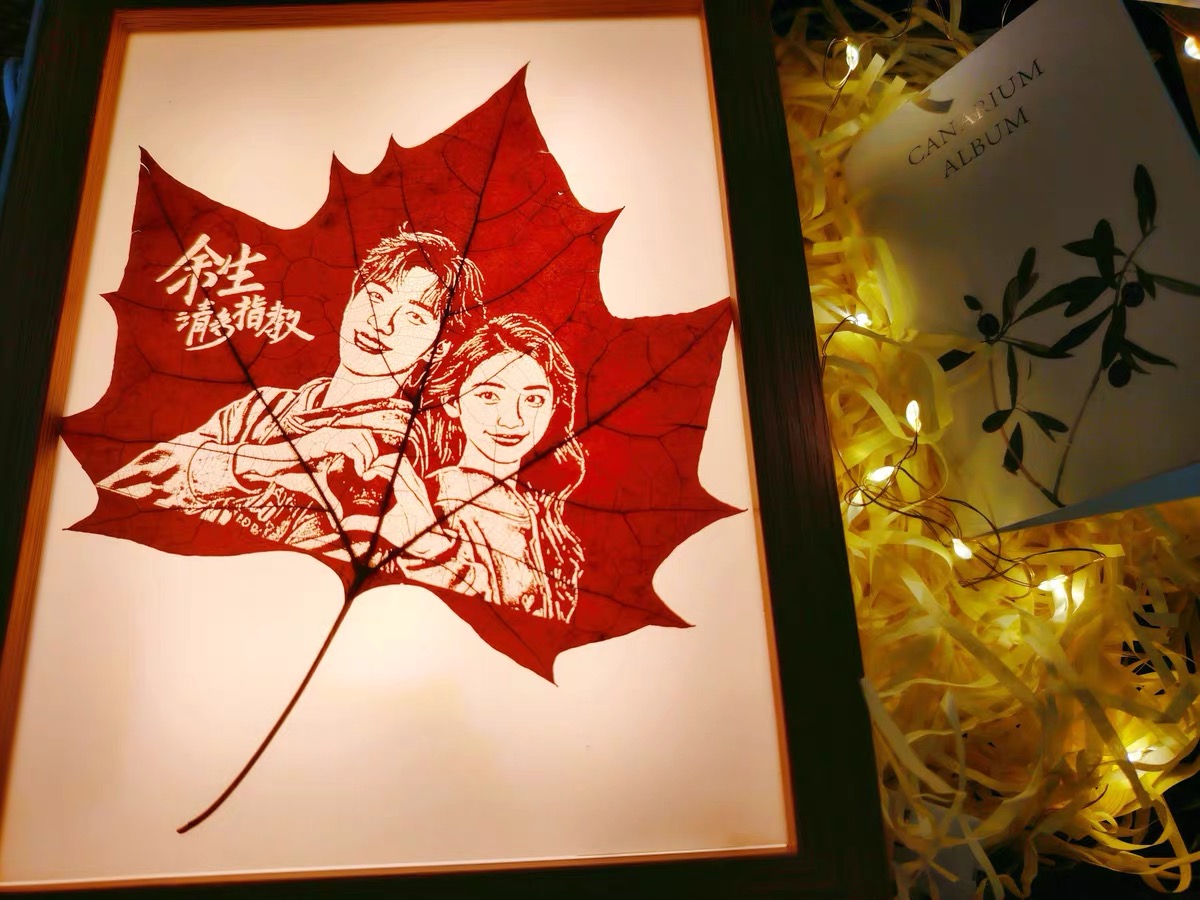
First, every leaf carving is a one-of-a-kind piece. The natural uniqueness of the leaf plus the hand-carved details mean no two works are identical. Second, it carries the depth of intangible cultural heritage—a continuation of a thousand-year-old craft. Collecting a leaf carving is like collecting a piece of cultural memory. Most importantly, it can hold personalized emotions: you can customize it with a name, a blessing, or a memorable moment. Such a leaf carving becomes an irreplaceable treasure unique to you.
I keep a leaf carving engraved with the ancient architectures of my hometown on my desk. Every time I see it, I feel a gentle sense of nostalgia, no matter how far I am from home.
We often say “life needs a sense of ritual,” but ritual does not have to be expensive. It could be something as simple as a small leaf carving—born from nature, shaped by a craftsman’s hands, filled with cultural warmth, and finally finding its way into your palm.
When you hold it, you can see the veins of the leaf, feel the traces of the carving, and recall stories of time, craftsmanship, and beauty. That is perhaps the most precious thing about leaf carvings: they remind us to slow down, notice the beauty hidden in the ordinary, and understand that the most touching things in life always carry the warmth of handcraftsmanship.